
Chasing unpredictable deal flow and impersonal lead lists leaves many tech founders and sales leaders frustrated. For those building fast-growth startups, identifying and connecting with decision-makers demands more than cold messages or generic lead generation tactics. Relationship-driven outreach on LinkedIn creates opportunities for genuine professional engagement, helping your team nurture qualified leads and establish a trusted presence. Learn how focused profile optimization, strategic content, and thoughtful networking combine to turn connections into consistent business conversations.
Table of Contents
- Defining LinkedIn Lead Generation For B2B
- Core Systems Behind Consistent Deal Flow
- Building Visibility And Trust With Outreach
- Driving Conversation Momentum, Not Just Connections
- Realistic Expectations And Common Misconceptions
Key Takeaways
| Point | Details |
|---|---|
| B2B Lead Generation Focuses on Relationship Building | LinkedIn lead generation prioritizes long-term professional relationships over quick sales, emphasizing genuine interactions. |
| Profile and Content are Essential | Effective lead generation relies on an optimized profile and a consistent stream of valuable content that showcases expertise. |
| Trust is Key | Building trust through authentic engagement and value-driven outreach is crucial for successful interactions on LinkedIn. |
| Quality Over Quantity | It is important to prioritize meaningful connections and personalized approaches rather than simply increasing connection numbers. |
Defining LinkedIn Lead Generation for B2B
LinkedIn Lead Generation represents a strategic approach for B2B companies to identify, attract, and engage potential business customers within a professional digital ecosystem. Unlike traditional sales methods, this process leverages LinkedIn’s unique professional networking capabilities to build meaningful connections with decision-makers.
At its core, B2B lead generation on LinkedIn involves creating a systematic process for discovering and nurturing potential business opportunities through targeted professional interactions. The methodology goes beyond simple connection requests, focusing instead on establishing genuine professional relationships.
Key components of effective LinkedIn B2B lead generation include:
- Profile Optimization: Crafting a compelling professional profile that demonstrates expertise and credibility
- Content Strategy: Developing and sharing valuable industry insights that position you as a thought leader
- Strategic Networking: Connecting purposefully with relevant professionals in your target industries
- Relationship Building: Engaging authentically through meaningful conversations and value-driven interactions
Relationship-driven outreach distinguishes successful LinkedIn lead generation from traditional cold outreach. The platform enables precise targeting based on professional attributes like industry, job title, company size, and geographic location, allowing for highly personalized engagement strategies.
Organic Growth Principles are fundamental to effective LinkedIn lead generation. This means creating consistent, valuable content that attracts potential clients naturally, rather than relying on aggressive sales tactics or automated messaging.
Pro tip: Focus on providing genuine value in every interaction, treating each connection as a potential long-term professional relationship rather than a short-term sales opportunity.
Here’s a concise comparison of LinkedIn lead generation versus traditional B2B sales approaches:
| Aspect | LinkedIn Lead Generation | Traditional B2B Sales |
|---|---|---|
| Targeting Precision | Highly focused by industry/job | Often broad or generic |
| Relationship Depth | Long-term, value-driven | Typically short-term, sales focus |
| Outreach Strategy | Personalized, insightful | Often scripted, mass messages |
| Conversion Timeline | Gradual, builds trust | Variable, often immediate |
Core Systems Behind Consistent Deal Flow
Consistent deal flow requires a strategic, systematic approach to LinkedIn networking that goes beyond random interactions. Strategic outreach systems transform sporadic connection attempts into predictable business opportunities through intentional, value-driven engagement.

The core architecture of an effective LinkedIn lead generation system involves several interconnected components that work together to create a reliable pipeline of potential business relationships. These components are not standalone tactics, but integrated strategies that compound their impact over time.
Key system components include:
- Profile Architecture: Designing a professional profile that communicates expertise and credibility instantly
- Content Ecosystem: Creating a consistent stream of valuable, industry-specific insights that demonstrate thought leadership
- Engagement Mechanics: Developing repeatable processes for meaningful professional interactions
- Targeting Methodology: Implementing precise connection strategies focused on ideal customer profiles
- Trust Acceleration: Building rapid professional credibility through strategic content and genuine interactions
Successful systems recognize that trust generation is more important than volume. Each interaction should be viewed as an opportunity to provide value, educate, and build genuine professional relationships rather than pursuing immediate sales conversions.
Consistent deal flow emerges from systematic relationship building, not transactional networking approaches.
The most effective LinkedIn lead generation systems are adaptive, allowing for continuous refinement based on engagement metrics and audience response. This means constantly analyzing interaction patterns, understanding which content resonates, and adjusting your approach to maximize professional connection quality.
Pro tip: Treat your LinkedIn lead generation system like an ongoing research project, continually experimenting with and optimizing your approach based on real-world feedback and interaction results.
Building Visibility and Trust With Outreach
Professional visibility on LinkedIn goes far beyond simple profile creation or connection requests. B2B LinkedIn marketing strategies fundamentally rely on consistently demonstrating credibility through authentic, value-driven interactions that build genuine professional relationships.
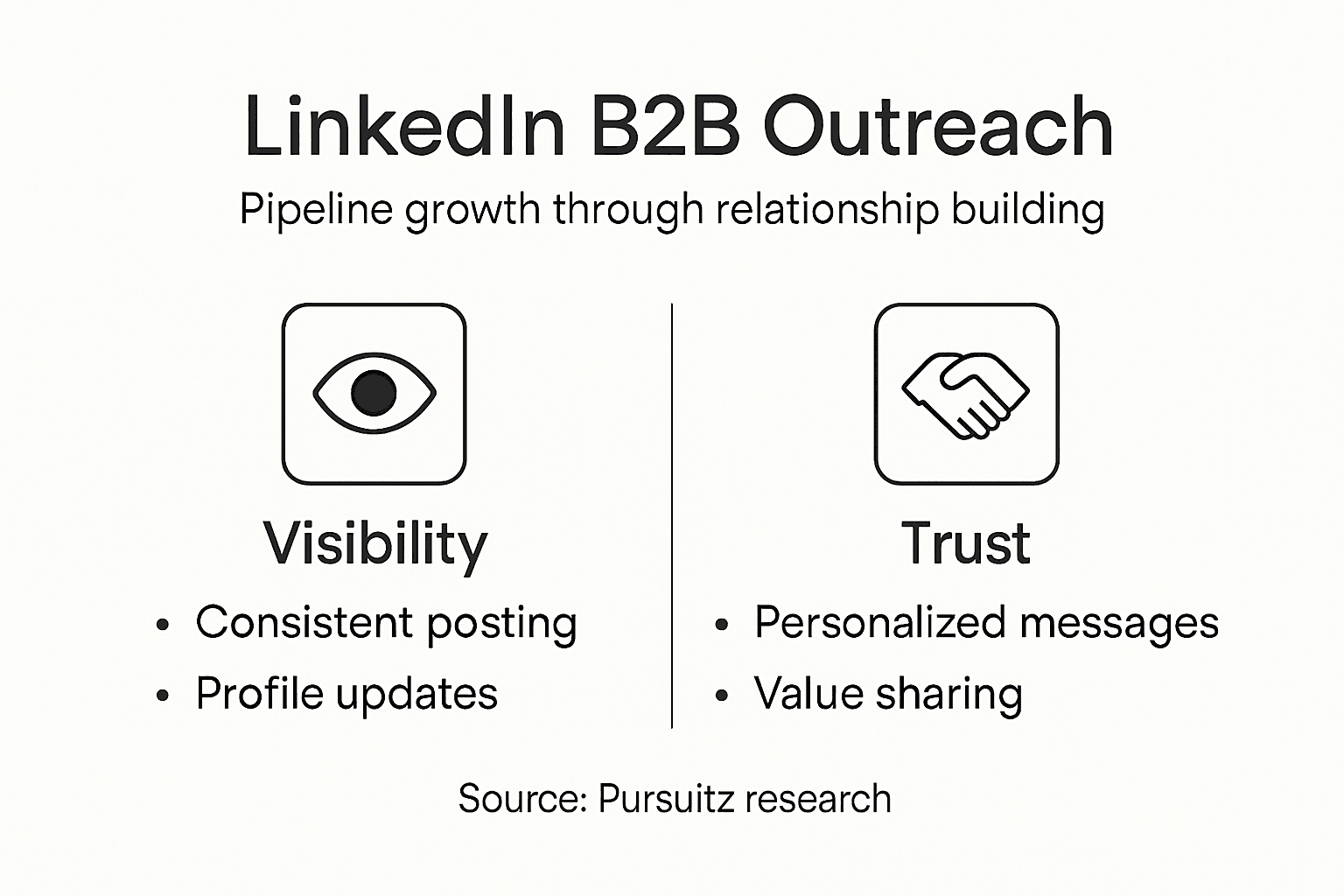
The foundation of effective outreach centers on understanding that trust is earned through systematic, meaningful engagement rather than transactional networking approaches. This means each interaction should be viewed as an opportunity to provide insight, solve problems, or share meaningful professional perspectives.
Key elements of trust-building outreach include:
- Personalized Connection Requests: Crafting thoughtful, context-specific messages that explain your reason for connecting
- Thought Leadership Content: Sharing original insights, industry analysis, and professional perspectives
- Consistent Engagement: Regularly commenting, sharing, and meaningfully responding to others’ content
- Professional Storytelling: Demonstrating your professional journey and expertise through authentic narrative
- Value-First Approach: Prioritizing educational and helpful interactions over direct sales pitches
Strategic visibility requires a nuanced understanding of how professional networks actually develop. Unlike traditional sales approaches, LinkedIn demands a more sophisticated method of building relationships that emphasizes mutual professional growth and genuine connection.
Trust is not a destination, but a continuous journey of consistent, authentic professional interactions.
Successful outreach strategies recognize that visibility is not about volume, but about the quality and relevance of your professional contributions. This means carefully curating your content, choosing connections strategically, and maintaining a consistent, genuine presence that reflects your professional brand.
Pro tip: Approach each LinkedIn interaction as an opportunity to learn, contribute, and build long-term professional relationships rather than pursuing immediate transactional outcomes.
Driving Conversation Momentum, Not Just Connections
Conversation momentum represents the critical difference between passive networking and active professional relationship building. Unlike traditional connection strategies that focus on accumulating contacts, successful LinkedIn engagement requires creating meaningful dialogues that progress naturally and authentically.
The art of driving conversation momentum involves understanding that each interaction is an opportunity to establish genuine professional rapport. This means moving beyond surface-level exchanges and developing substantive conversations that provide real value, insights, and potential collaborative opportunities.
Key strategies for maintaining conversation momentum include:
- Contextual Follow-ups: Crafting responses that directly reference previous dialogue points
- Curiosity-Driven Questioning: Asking thoughtful, open-ended questions that invite deeper exploration
- Value Contribution: Sharing relevant resources, insights, or perspectives that advance the conversation
- Active Listening: Demonstrating genuine interest by referencing specific details from earlier interactions
- Gradual Relationship Progression: Allowing professional connections to develop organically without forced outcomes
Meaningful dialogue requires a sophisticated approach that transcends transactional networking. Successful professionals understand that each conversation is a potential gateway to future opportunities, collaborations, or insights.
Conversation momentum is built through genuine curiosity, not calculated networking tactics.
The most effective LinkedIn interactions are those that feel natural, reciprocal, and driven by mutual professional interest. This means creating space for authentic exchanges that go beyond immediate business objectives and focus on long-term relationship development.
Pro tip: Treat each professional conversation as an opportunity to learn, understand, and build meaningful connections rather than pursuing immediate, narrow objectives.
Realistic Expectations and Common Misconceptions
LinkedIn lead generation is a nuanced process that requires sophisticated understanding beyond simplistic marketing assumptions. LinkedIn lead generation strategies demand a strategic, patient approach that prioritizes quality relationship building over quick transactional wins.
Many professionals enter LinkedIn networking with unrealistic expectations about speed, volume, and immediate conversion potential. The reality is that meaningful professional connections develop gradually, requiring consistent investment in genuine relationship development and strategic communication.
Common misconceptions about LinkedIn lead generation include:
- Instant Result Syndrome: Believing sophisticated professional relationships can be manufactured quickly
- Volume Over Quality: Prioritizing connection numbers instead of meaningful interactions
- Automated Outreach Fallacy: Thinking generic, templated messages produce meaningful engagement
- Transactional Mindset: Approaching conversations as immediate sales opportunities
- One-Size-Fits-All Approach: Assuming identical strategies work across different industries and professional contexts
Sustainable professional networking requires understanding that LinkedIn is fundamentally a relationship-building platform, not a sales automation tool. Successful practitioners recognize the importance of genuine, value-driven interactions that transcend immediate commercial objectives.
Professional relationships are marathons, not sprints. Patience and authenticity create lasting connections.
The most effective LinkedIn lead generation strategies integrate long-term relationship cultivation, consistent value contribution, and strategic positioning. This means developing a holistic approach that balances targeted outreach, thought leadership, and meaningful professional dialogue.
Pro tip: Invest in building genuine professional relationships by consistently providing unique insights and demonstrating authentic interest in others’ professional journeys.
Review these common misconceptions versus the realities of LinkedIn B2B lead generation:
| Misconception | Reality | Impact if Unaddressed |
|---|---|---|
| Quick results expected | Requires patience and effort | Leads to disappointment |
| Volume over quality | Quality connections matter | Diluted engagement |
| Automated outreach works | Genuine interaction wins | Low response rates |
| One-size strategy fits | Custom approach needed | Poor targeting |
Enhance Your B2B LinkedIn Lead Generation With Proven Systems
The challenge of building predictable deal flow and genuine professional trust on LinkedIn is real and complex. As highlighted in the article, many struggle with shifting from generic connection requests to relationship-driven outreach that fosters authentic conversations and long-term partnerships. If you are aiming to transform your LinkedIn strategy into a systematic engine that prioritizes trust and quality over volume and automation, understanding the core systems behind consistent deal flow is critical.
Pursuitz specializes in helping B2B founders and leadership teams develop hyper-personalized LinkedIn outreach combined with founder-led personal branding. Our approach eliminates the noise of paid ads and generic pitches by focusing on trust-first conversations, system design, and measurable inputs to deliver a pipeline you can count on. Ready to accelerate your LinkedIn results the right way? Explore how to integrate consistent content distribution and strategic engagement at Pursuitz and start building your predictable, trust-based pipeline today. Visit https://pursuitz.io to learn more and take the next step toward sustainable B2B growth.
Frequently Asked Questions
What is LinkedIn lead generation for B2B?
LinkedIn lead generation for B2B is a strategic approach for businesses to identify and engage potential customers through professional networking on the platform, focusing on building meaningful relationships rather than just selling.
How can I enhance my LinkedIn profile for lead generation?
To enhance your LinkedIn profile for lead generation, optimize it by showcasing your expertise, using a professional photo, writing a compelling summary, and highlighting key accomplishments that demonstrate your credibility.
What are the key components of an effective LinkedIn lead generation strategy?
Key components of an effective LinkedIn lead generation strategy include profile optimization, a solid content strategy, strategic networking, and a strong focus on relationship building through genuine interactions.
How can I build trust with potential leads on LinkedIn?
Building trust with potential leads on LinkedIn involves personalized outreach, consistent engagement, sharing valuable content, and approaching conversations with a value-first mindset to foster authentic professional relationships.