

Many B2B founders reach a point where random LinkedIn messages and cold emails fall flat, draining time without real results. For seasoned professionals across North America, the shift to structured outreach is not just about more activity—it is about implementing measurable system inputs that guide every revenue move. This guide distills proven steps for building consistent LinkedIn engagement and turning thoughtful actions into reliable business growth, all without traditional spammy tactics.
Table of Contents
- Step 1: Define Measurable System Inputs For Outbound Success
- Step 2: Align Messaging And Targeting To Drive Conversation Momentum
- Step 3: Establish Structured LinkedIn Outreach For Consistent Engagement
- Step 4: Track Pipeline Signals To Increase Revenue Visibility
- Step 5: Refine Processes To Ensure Ongoing Revenue Predictability
Quick Summary
| Key Insight | Explanation |
|---|---|
| 1. Define measurable inputs | Establish key performance indicators to track outbound metrics, ensuring visibility into pipeline health. |
| 2. Personalize messaging | Tailor outreach communications based on detailed customer profiles to enhance engagement and relevance. |
| 3. Use structured LinkedIn outreach | Implement a systematic approach to LinkedIn connections, focusing on consistent and meaningful engagement. |
| 4. Monitor pipeline signals | Track critical indicators of engagement and conversion to improve revenue forecasting and opportunities. |
| 5. Continuously refine processes | Regularly evaluate and optimize revenue processes to enhance predictability and maintain competitive agility. |
Step 1: Define measurable system inputs for outbound success
Successful outbound systems start with precise, trackable inputs that transform sporadic efforts into predictable revenue generation. In this critical first step, we’ll break down exactly how to establish meaningful measurements that drive consistent performance.
To create a robust outbound system, you’ll need to identify key performance indicators that provide clear visibility into your pipeline’s health. These metrics aren’t just numbers – they’re strategic signals revealing your team’s engagement and potential.
Here are the foundational system inputs every high-performing outbound team must track:
- Connection Volume: Total weekly LinkedIn connections initiated
- Conversation Rate: Percentage of connections resulting in substantive dialogue
- Discovery Meeting Conversion: Number of initial conversations turning into qualified opportunities
- Pipeline Velocity: Average time from first connection to closed deal
The goal isn’t just collecting data – it’s designing a measurement framework that transforms inputs into predictable outcomes. Behavioral research in sales control systems confirms that clear, tracked behaviors directly correlate with improved sales performance.
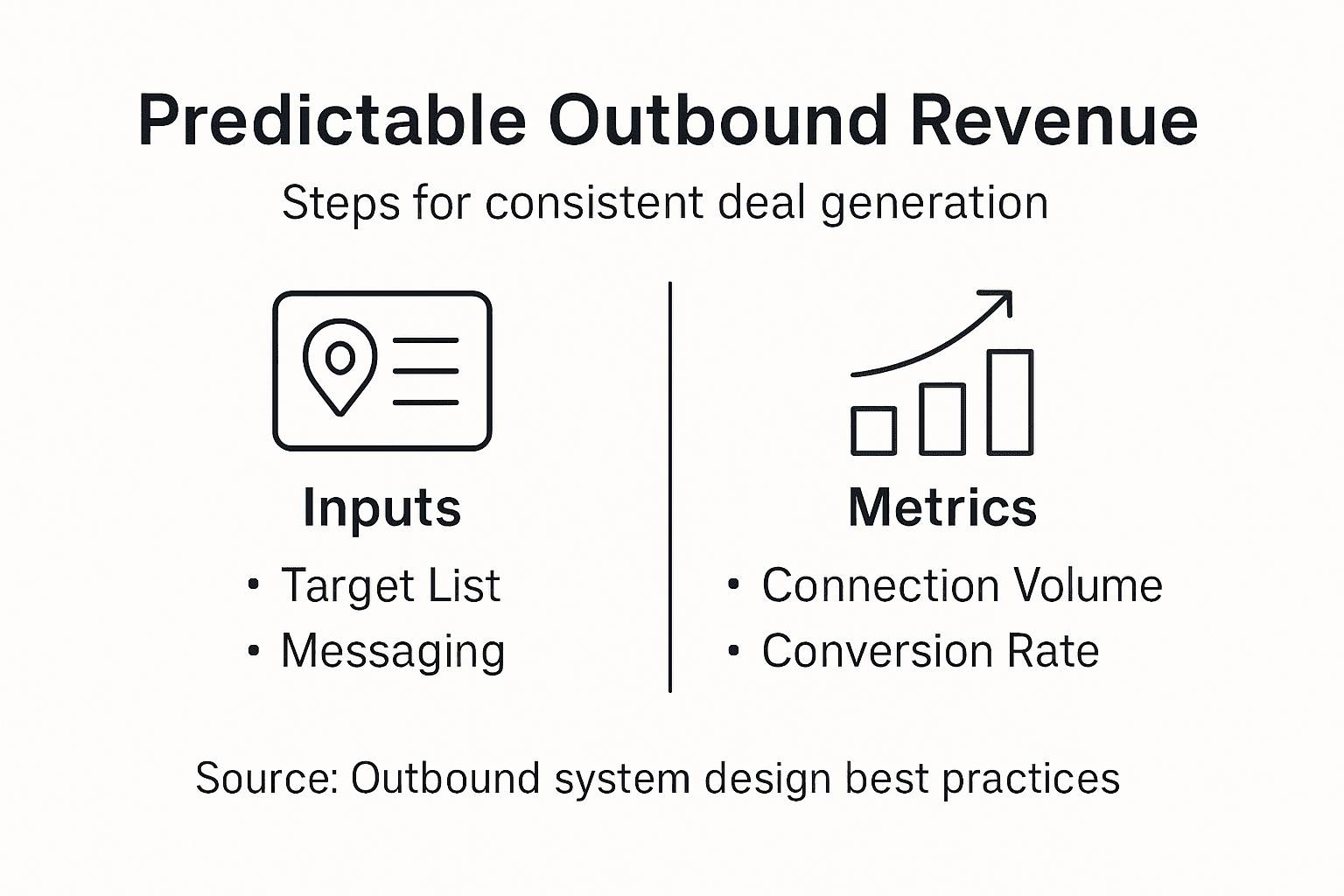
Here’s how key outbound metrics impact business outcomes:
| Metric | What It Measures | Business Impact |
|---|---|---|
| Connection Volume | Outreach activity level | Increases prospect pool |
| Conversation Rate | Engagement effectiveness | Boosts qualified opportunities |
| Discovery Meeting Conversion | Lead qualification quality | Improves pipeline reliability |
| Pipeline Velocity | Sales cycle speed | Accelerates revenue realization |
Measuring the right inputs creates a roadmap from activity to revenue – not just hope.
Pro tip: Implement a weekly review ritual where you analyze these inputs, looking for trends and opportunities to optimize your outbound approach.
Step 2: Align messaging and targeting to drive conversation momentum
Designing a precise outbound strategy requires more than random connections – it demands strategic messaging that speaks directly to your ideal prospects. This step focuses on transforming your targeting approach from generic outreach to highly personalized engagement.
Successful teams leverage granular customer profiling to create messaging that resonates across different decision-maker levels. By understanding nuanced buyer personas, you can craft communications that feel tailored and relevant.
Key elements of strategic targeting include:
- Ideal Customer Profile (ICP): Detailed breakdown of company size, industry, and specific challenges
- Decision-Maker Mapping: Understanding roles, pain points, and communication preferences
- Content Relevance: Developing messaging that speaks directly to each persona’s unique needs
- Multichannel Approach: Integrating LinkedIn, content, and personalized touchpoints
Outbound sales sequences work best when you segment prospects meticulously and differentiate your approach based on precise insights. This means moving beyond surface-level demographics to understand the deeper motivations driving each potential customer.
Effective targeting transforms cold outreach into meaningful conversations.
Pro tip: Create a dynamic messaging framework that allows quick customization while maintaining a consistent core narrative across different prospect segments.
Step 3: Establish structured LinkedIn outreach for consistent engagement
Creating a predictable outbound system requires more than sporadic connections – it demands a disciplined, repeatable approach to LinkedIn engagement. This step will transform your outreach from random interactions to a strategic, measurable process.

LinkedIn outreach playbooks provide the critical framework for systematic connection building. By centralizing your targeting strategy, you’ll create a repeatable system that ensures consistent communication and eliminates the guesswork from your prospecting efforts.
Key components of a structured LinkedIn outreach system include:
- Connection Strategy: Defining ideal prospect profiles and engagement criteria
- Messaging Templates: Developing adaptable yet personalized communication scripts
- Engagement Cadence: Establishing consistent touchpoint frequency and follow-up protocols
- Performance Tracking: Monitoring connection acceptance, response, and conversion rates
Successful outreach isn’t about volume – it’s about creating meaningful interactions that build genuine professional relationships. This means moving beyond generic connection requests to crafting nuanced, value-driven communications that resonate with your target audience.
Consistency in outreach transforms scattered efforts into predictable business growth.
Pro tip: Design a flexible outreach workflow that allows for personalization while maintaining a structured, measurable approach to connection building.
Step 4: Track pipeline signals to increase revenue visibility
Transforming your outbound strategy from guesswork to precision requires developing a robust system for tracking meaningful pipeline signals. This step focuses on creating a comprehensive approach that gives you real-time insights into your revenue potential.
Pipeline signal tracking is crucial for understanding the health and trajectory of your sales efforts. By monitoring key indicators across your entire sales motion, you’ll gain unprecedented visibility into potential revenue streams and emerging opportunities.
Critical pipeline signals to monitor include:
- Engagement Depth: Quality and frequency of prospect interactions
- Conversion Momentum: Movement of leads through different pipeline stages
- Response Velocity: Speed and quality of prospect communication
- Opportunity Quality: Potential deal size and likelihood of closure
Advanced revenue teams leverage AI-powered tracking platforms to transform raw data into actionable insights. This means moving beyond traditional metrics to understanding the nuanced signals that indicate genuine sales potential.
Pipeline visibility transforms uncertainty into strategic foresight.
Pro tip: Develop a consistent weekly ritual of reviewing pipeline signals, treating them as leading indicators rather than lagging results.
Step 5: Refine processes to ensure ongoing revenue predictability
Building a sustainable revenue engine requires more than initial strategy – it demands continuous process refinement and strategic alignment. This step focuses on transforming your revenue generation from a sporadic effort into a predictable, repeatable system.
Revenue Operations (RevOps) provides the critical framework for unifying people, processes, and technology across your organization. By creating integrated workflows and data-driven decision mechanisms, you’ll establish a foundation for consistent revenue growth.
Key elements of process refinement include:
- Performance Rhythm: Establishing consistent review and optimization cycles
- Cross-Functional Alignment: Breaking down silos between sales, marketing, and customer success
- Continuous Learning: Implementing feedback loops that capture insights from every interaction
- Adaptive Forecasting: Developing flexible predictive models that respond to market shifts
Successful teams leverage strategic revenue cadence to maintain momentum. This means creating structured quarterly cycles with frequent performance analysis and intentional course corrections that keep your revenue generation agile and responsive.
Process refinement transforms unpredictable revenue into a systematic growth engine.
Pro tip: Schedule quarterly deep-dive sessions to critically evaluate your revenue processes, treating them as living systems that require continuous optimization.
This table summarizes outbound process improvement strategies by stage:
| Stage | Main Focus | Example Optimization |
|---|---|---|
| Targeting | Refined segmentation | Update buyer personas |
| Messaging | Personalization | A/B test outreach copy |
| Engagement | Consistent touchpoints | Set follow-up cadences |
| Tracking | Real-time pipeline data | Implement dashboards |
| Process Refinement | Continuous improvement | Run quarterly reviews |
Unlock Predictable Revenue with a LinkedIn Growth System
If you struggle with creating a reliable outbound strategy that turns random outreach into consistent deal flow you are not alone. This article highlights key challenges such as defining measurable system inputs and aligning messaging to build meaningful conversations and a healthy sales pipeline. These pain points resonate deeply with B2B founders and leadership teams aiming to escape unreliable lead generation efforts.
At Pursuitz, we specialize in solving these exact problems by designing hyper-personalized LinkedIn outreach systems combined with founder-led personal branding and consistent content distribution. Our trust-first approach replaces generic tactics with measurable inputs that feed a predictable revenue engine over time without relying on email blasts or paid ads.
Ready to transform your outbound process into a structured, scalable system that drives consistent conversations and pipeline velocity? Discover how our proven strategies can align your messaging, targeting, and outreach cadence for lasting growth at Pursuitz. Take the first step toward predictable revenue today.
Frequently Asked Questions
What are the key performance indicators for designing outbound systems?
Establish key performance indicators (KPIs) such as Connection Volume, Conversation Rate, Discovery Meeting Conversion, and Pipeline Velocity. Track these metrics to gain clear visibility into your outbound efforts and consistently improve performance.
How can I personalize my messaging in outbound systems?
To personalize your messaging, develop an Ideal Customer Profile (ICP) and map out decision-makers’ roles and challenges. Tailor your communication to address specific needs, thereby increasing engagement and converting outreach into meaningful conversations.
What steps can I take to create a structured LinkedIn outreach process?
Define your ideal prospect profiles, create adaptable messaging templates, and establish a consistent engagement cadence. By implementing these steps, you can convert random interactions into a disciplined, repeatable outreach strategy that fosters ongoing engagement.
How do I track pipeline signals effectively?
Monitor critical pipeline signals such as Engagement Depth, Conversion Momentum, and Opportunity Quality. Implement regular reviews of these signals to gain real-time insights that enhance your visibility into potential revenue streams.
What is the importance of process refinement in outbound systems?
Process refinement ensures that your revenue generation efforts are systematic and repeatable. Schedule quarterly reviews to analyze and adjust your processes, aiming for continuous improvement and better alignment across your sales operations.
How can I implement a weekly review ritual for outbound metrics?
Set aside time each week to analyze your outbound metrics, such as Connection Volume and Conversation Rate. Look for trends and areas for optimization, aiming to enhance your approach and boost performance consistently.