

Sending the same message to hundreds of LinkedIn prospects rarely leads to real conversations. For B2B founders and sales leaders, the struggle is not just growing lists, but building meaningful professional relationships that fuel a stable pipeline. Discover how personalized LinkedIn outreach—supported by research, context, and smart positioning—helps mid-sized SaaS companies drive higher-value opportunities while safeguarding brand reputation and maximizing return on each connection.
Table of Contents
- Defining LinkedIn Outreach Agencies And Misconceptions
- Strategic Versus Activity-Based Outreach Models
- The Role Of Research, Context, And Positioning
- Pipeline Stability And Measurement In Outreach Systems
- Collaboration Expectations Between Teams And Agencies
Key Takeaways
| Point | Details |
|---|---|
| Understanding LinkedIn Outreach | LinkedIn outreach agencies focus on creating meaningful connections rather than relying on mass messaging, emphasizing quality over quantity. |
| Strategic vs. Activity-Based Models | A successful LinkedIn strategy prioritizes relationship building and personalization over simply increasing connection volumes. |
| Importance of Research and Context | Comprehensive research into prospects enables tailored communication that resonates, transforming generic outreach into valuable conversations. |
| Collaborative Expectations | Effective partnerships between B2B teams and outreach agencies rely on clear communication, role definitions, and mutual accountability for success. |
Defining LinkedIn Outreach Agencies and Misconceptions
LinkedIn outreach agencies are specialized service providers focused on helping B2B companies build strategic connections and generate predictable pipeline through personalized platform engagement. Unlike traditional lead generation vendors, these agencies understand that meaningful business relationships cannot be reduced to mass messaging or automated connection requests.
These strategic partners recognize that effective LinkedIn outreach requires nuanced approaches that balance technology and human insight. Strategic scaling requires understanding platform dynamics beyond simple automation tactics. Key differentiators include:
- Deep understanding of LinkedIn’s algorithmic preferences
- Ability to craft hyper-personalized messaging strategies
- Compliance with platform engagement policies
- Advanced targeting techniques beyond basic demographic filters
- Sophisticated research processes that uncover genuine business opportunities
Most companies mistakenly view LinkedIn outreach as a volume game, believing more connections automatically translate to more opportunities. However, sophisticated agencies recognize that quality trumps quantity. They focus on:
- Identifying high-intent prospects
- Developing contextually relevant engagement approaches
- Building trust through genuine interaction
- Creating multi-touchpoint relationship development strategies
Strategic LinkedIn outreach is about creating meaningful conversations, not collecting connections.
The fundamental misconception is treating LinkedIn like another broadcast channel. Effective agencies understand it’s a relationship-building platform where trust, relevance, and genuine value determine success.
Pro Tip: Invest more time in researching and understanding your ideal prospect’s professional context than crafting generic outreach messages.
Strategic Versus Activity-Based Outreach Models
In the B2B growth ecosystem, LinkedIn outreach strategies fundamentally diverge into two distinct approaches: strategic and activity-based models. Strategic outreach prioritizes meaningful connections and value-driven interactions, while activity-based models focus purely on quantitative metrics and volume of connections.
Strategic SaaS growth demands precision beyond simple numerical targets. The key differences between these models include:
- Depth of prospect research
- Quality of personalization
- Understanding of prospect’s business context
- Conversion potential of interactions
- Long-term relationship building potential
Activity-based outreach operates on a mechanical principle: more connections equal more potential opportunities. This approach typically involves:
- Sending high-volume connection requests
- Using generic templated messages
- Prioritizing quantity over quality
- Minimal personalization
- Rapid, superficial engagement
In contrast, strategic outreach represents a sophisticated, research-driven methodology. Targeted engagement means carefully profiling ideal client personas, understanding their specific challenges, and crafting messages that demonstrate genuine understanding and value.
Strategic outreach transforms cold connections into meaningful professional relationships.
Successful strategic outreach requires investment in understanding prospect pain points, industry dynamics, and creating tailored communication strategies that resonate on a deeper professional level.

Here’s a comparison of strategic versus activity-based LinkedIn outreach approaches:
| Aspect | Strategic Outreach | Activity-Based Outreach |
|---|---|---|
| Focus | Relationship quality and relevance | Connection volume and numbers |
| Personalization Level | Highly targeted and custom | Generic and templated |
| Research Depth | In-depth prospect understanding | Minimal or no research |
| Long-Term Potential | Builds sustainable partnerships | Limited ongoing relationships |
| Impact on Pipeline | Drives higher-value opportunities | Creates unpredictable pipeline |
Pro Tip: Develop a detailed ideal customer profile that goes beyond basic demographics and includes specific business challenges and professional aspirations.
The Role of Research, Context, and Positioning
In the sophisticated landscape of B2B LinkedIn outreach, research, context, and positioning emerge as critical pillars that transform generic connections into meaningful business opportunities. These interconnected elements form the foundation of strategic engagement, enabling companies to move beyond superficial networking into genuine relationship building.
Strategic LinkedIn outreach demands precision through meticulous research and contextual understanding. The research process encompasses multiple critical dimensions:
- Comprehensive analysis of prospect’s professional background
- Detailed mapping of industry-specific challenges
- Understanding organizational structure and decision-making dynamics
- Identifying potential pain points and strategic opportunities
- Tracking recent professional achievements and transitions
Contextual positioning requires diving deep into the prospect’s world. This means going beyond surface-level demographics to understand:
- Specific industry trends
- Organizational growth challenges
- Individual professional aspirations
- Competitive landscape pressures
- Potential innovation barriers
Successful positioning transforms raw research into a compelling narrative that speaks directly to the prospect’s unique situation. Targeted value propositions must demonstrate an intimate understanding of their specific business ecosystem, showing how your solution addresses their most pressing challenges.
Effective positioning bridges the gap between generic outreach and meaningful professional dialogue.
The most sophisticated LinkedIn outreach strategies recognize that research is not a one-time activity but a continuous process of understanding and adapting to evolving professional landscapes.
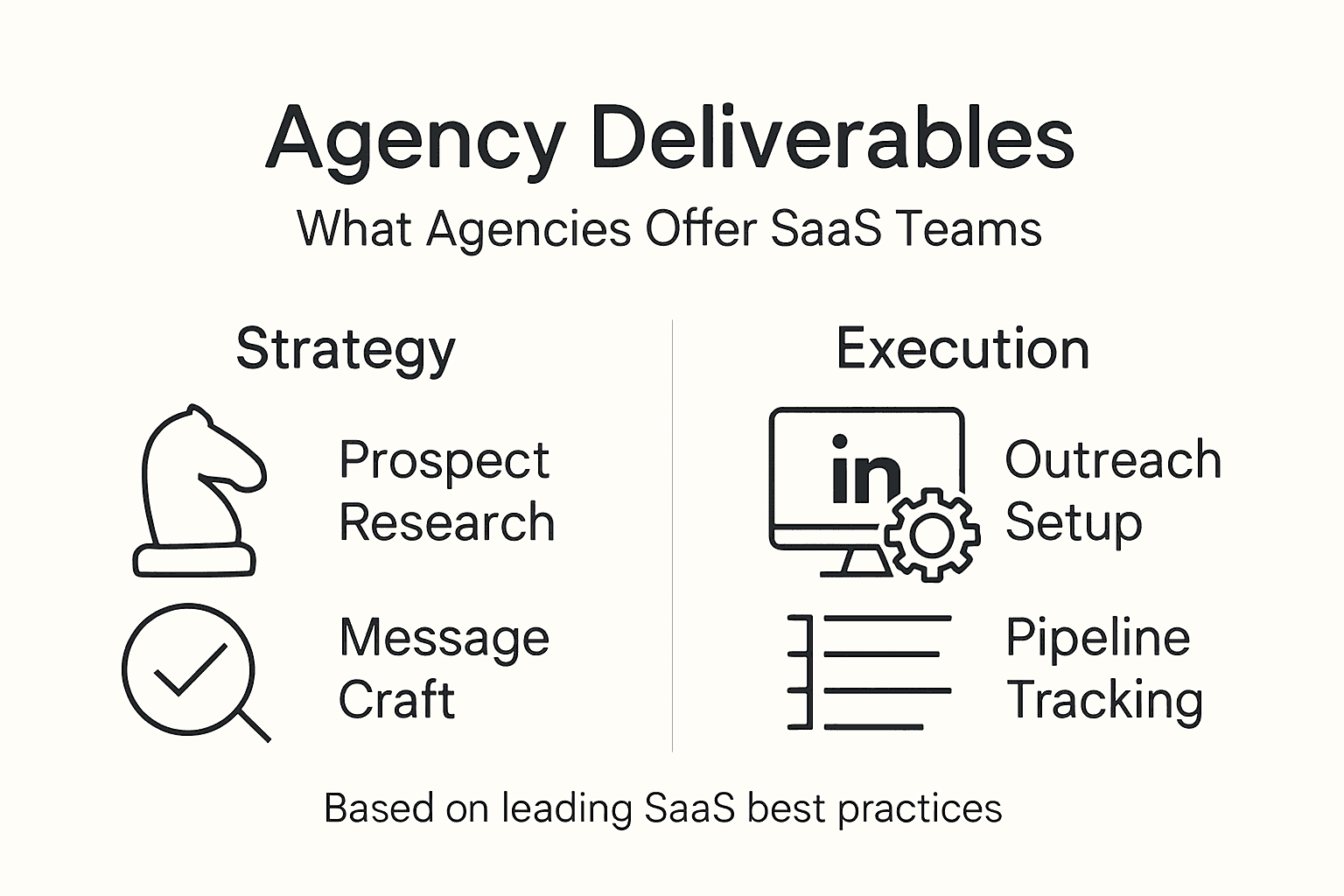
Pro Tip: Create a dynamic research template that allows you to systematically capture and update insights about your target prospects, ensuring your outreach remains relevant and personalized.
Pipeline Stability and Measurement in Outreach Systems
Successful B2B growth hinges on predictable pipeline performance, transforming LinkedIn outreach from a random activity into a systematic revenue generation engine. Pipeline stability represents more than just tracking numbers—it’s about understanding the nuanced relationship between strategic connections and sustainable business growth.
Pipeline performance requires strategic measurement across multiple critical dimensions. The most sophisticated outreach systems focus on quality metrics that reveal deeper insights:
- Lead-to-customer conversion rates
- Sales cycle velocity
- Opportunity progression speed
- Engagement quality indicators
- Long-term relationship potential
Measurement in strategic outreach goes beyond traditional sales funnel thinking. Effective systems track:
- Depth of initial prospect interactions
- Relevance of connection conversations
- Trust-building trajectory
- Alignment with ideal customer profile
- Potential lifetime customer value
The goal is not just filling a pipeline, but creating a predictable revenue mechanism that can be systematically refined and scaled. Precise tracking allows teams to understand exactly which outreach strategies generate meaningful business opportunities.
Pipeline stability emerges from consistent, intentional relationship development—not volume-based tactics.
Companies must view pipeline measurement as a continuous learning process, using insights to constantly recalibrate their approach and improve connection quality.
Pro Tip: Develop a customized pipeline tracking dashboard that prioritizes relationship quality metrics over raw connection numbers.
Collaboration Expectations Between Teams and Agencies
Successful LinkedIn outreach partnerships demand more than transactional service delivery—they require a strategic collaboration model that aligns organizational goals, communication protocols, and performance expectations. Understanding these collaborative dynamics becomes crucial for B2B teams seeking predictable growth through personalized professional networking.
Strategic collaboration requires deliberate planning to establish clear frameworks for interaction. The most effective partnerships prioritize transparency through structured communication channels and mutually defined success metrics:
- Precise role definition
- Regular performance review cycles
- Transparent reporting mechanisms
- Shared understanding of ideal customer profiles
- Continuous learning and adaptation protocols
Effective collaboration between internal teams and LinkedIn outreach agencies involves establishing clear expectations around:
- Initial strategic alignment workshops
- Ongoing communication cadence
- Performance tracking and optimization
- Feedback and iteration processes
- Scalability and growth potential assessment
Agencies bring specialized expertise, while internal teams provide critical context about their business ecosystem. Mutual accountability becomes the cornerstone of successful partnerships, requiring consistent dialogue and willingness to adjust strategies based on emerging insights.
Collaboration is not about control, but about creating a symbiotic growth mechanism.
Successful partnerships transcend traditional vendor-client relationships, evolving into strategic growth collaborations that leverage complementary strengths and insights.
To help clarify key concepts, here is a summary of critical elements in successful LinkedIn outreach collaborations:
| Element | Purpose | Benefit to B2B Teams |
|---|---|---|
| Framework Alignment | Ensure shared goals and expectations | Smoother cooperation |
| Performance Tracking | Measure outcomes and adjust strategies | Informed decision-making |
| Role Definition | Clarify responsibilities | Reduces confusion and redundancy |
| Ongoing Feedback | Adapt quickly to new insights | Continuous improvement |
| Communication Protocol | Maintain transparency and information flow | Fosters trust and accountability |
Pro Tip: Develop a comprehensive onboarding document that explicitly outlines communication protocols, performance expectations, and collaborative mechanisms before initiating the partnership.
Unlock Predictable SaaS Growth with Strategic LinkedIn Outreach
The article highlights the challenge many SaaS companies face trying to scale LinkedIn outreach without falling into volume-driven, activity-based traps. It reveals the pain of generic messaging, lack of deep research, and missed opportunities caused by treating connections as numbers rather than meaningful relationships. If you are striving to build long-term pipeline stability through hyper-personalized engagement that respects context and trust you are aligned with the future of B2B growth.
At Pursuitz, we help B2B founders and leadership teams embrace a trust-first system design for LinkedIn outreach combined with founder-led personal branding and consistent content distribution. Our approach solves the core issues described like lack of contextual positioning and ineffective pipeline measurement by emphasizing genuine conversations, not just volume. Learn how our strategic, non-generic methods transform cold outreach into predictable deal flow on our main landing page. Experience the power of moving beyond simple automation to sustained, quality-driven growth with Pursuitz. Now is the time to stop guessing and start executing a LinkedIn outreach strategy that truly delivers for your SaaS growth.
Explore how to align your outreach efforts with proven systems by visiting Pursuitz and take the next step toward consistent, measurable pipeline growth.
Frequently Asked Questions
What is the main difference between strategic outreach and activity-based outreach in LinkedIn marketing?
Strategic outreach focuses on building meaningful connections and crafting personalized messages based on in-depth research, while activity-based outreach prioritizes sheer volume of connection requests with minimal personalization.
How do LinkedIn outreach agencies help generate a predictable sales pipeline?
LinkedIn outreach agencies utilize strategic engagement techniques and relationship-building efforts to create meaningful professional connections, resulting in a more reliable and predictable sales pipeline compared to generic outreach methods.
Why is research important for effective LinkedIn outreach?
Research is essential in LinkedIn outreach as it helps agencies understand prospects’ professional backgrounds, industry challenges, and specific pain points. This knowledge allows for tailored messaging that resonates with the prospect, enhancing the potential for engagement.
What should B2B companies expect from their collaboration with LinkedIn outreach agencies?
B2B companies should expect a strategic collaboration that includes clear communication, defined roles, shared success metrics, and ongoing performance reviews. This partnership should focus on aligning goals and continuously adapting strategies for optimal results.