

Cold calls and mass emails often feel impersonal in a world where authentic connection drives business growth. For B2B founders and sales leaders across North America, the search for leads goes beyond just reaching an audience, focusing on building trust-first engagement. This article breaks down the distinction between generic outreach and LinkedIn’s strategic, professional approach, showing how personalized networking outperforms traditional methods and empowers real business relationships.
Table of Contents
- Defining LinkedIn And Traditional Lead Generation
- Identity And Anonymity In Outreach Systems
- Contextual Vs. Interruptive Lead Engagement
- Trust Building Compared To Transactional Models
- Relationship Depth And Compounding Outcomes
- Choosing The Right Model For Your Environment
Key Takeaways
| Point | Details |
|---|---|
| Differences in Lead Generation Strategies | Traditional methods are broad and interruptive, while LinkedIn emphasizes targeted, relationship-driven engagement. |
| Importance of Professional Identity | LinkedIn’s verified profiles enhance trust and accountability, contrasting with anonymity in traditional outreach. |
| Contextual Engagement Over Interruptions | Effective lead engagement involves understanding the recipient’s context, making interactions more relevant and meaningful. |
| Focus on Building Trust | Transitioning from transactional to trust-based interactions fosters deeper, more valuable professional relationships. |
Defining LinkedIn and Traditional Lead Generation
Lead generation represents two dramatically different strategic landscapes where professional connection meets business opportunity. Targeted professional networking fundamentally transforms how companies discover and engage potential clients across digital platforms.
Traditional lead generation relies on broad, generic approaches that cast wide nets without precision. These methods typically involve:
- Cold calling random contact lists
- Mass email campaigns
- Trade show booth interactions
- Print advertising
- Purchasing contact databases
By contrast, LinkedIn Lead Generation represents a surgical, relationship-driven approach. This strategy transforms professional networking into a systematic method for building meaningful business connections. Unlike traditional tactics that interrupt potential clients, LinkedIn allows targeted, context-rich interactions where professionals can engage authentically.
The core difference lies in relationship depth. Traditional methods treat leads as transactions; LinkedIn treats them as potential collaborative partners. This shift means moving from anonymous interruption to identified, contextual engagement where professional reputation and trust become primary currencies.
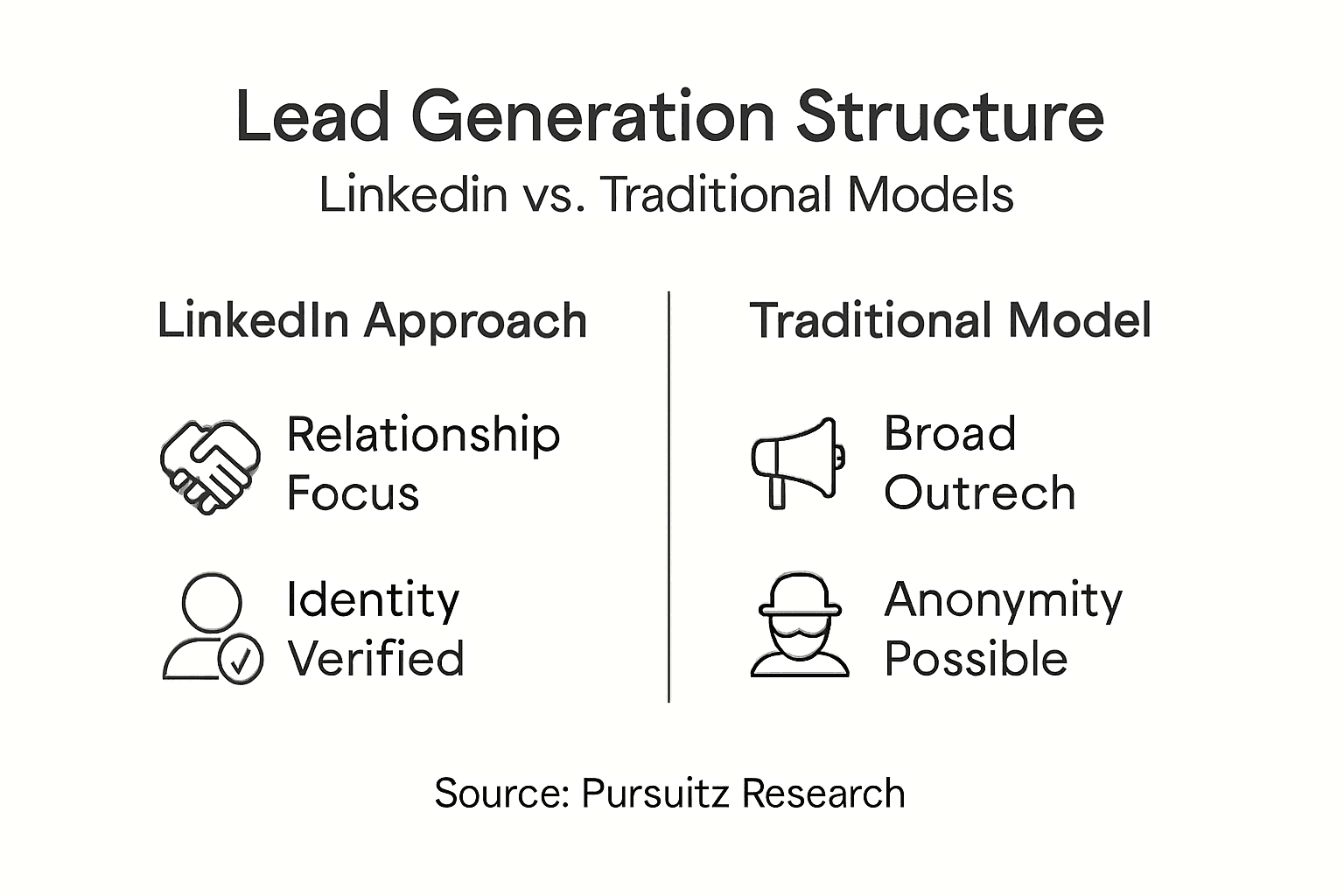
Here’s a concise comparison of LinkedIn and traditional lead generation methods:
| Aspect | Traditional Lead Generation | LinkedIn Lead Generation |
|---|---|---|
| Outreach Precision | Broad and generic | Highly targeted and context-rich |
| Relationship Building | Transaction-focused | Partnership and trust-oriented |
| Reputation Impact | Minimal or indirect | Direct influence on professional image |
| Engagement Quality | Often generic and interruptive | Personalized and engaging |
Key structural differences include:
- Identity verification
- Professional context availability
- Permission-based interaction
- Trust-first engagement model
- Transparent professional background
LinkedIn transforms lead generation from a numbers game into a strategic relationship-building process.
Pro Tip: Invest more time understanding a potential connection’s professional journey before reaching out, ensuring your initial engagement provides genuine value.
Identity and Anonymity in Outreach Systems
Identity serves as the fundamental differentiator between traditional and modern lead generation strategies. Maintaining participant confidentiality represents a critical consideration in contemporary professional networking approaches.
Traditional outreach systems operate with minimal identity verification, often relying on purchased contact lists and anonymous communication channels. These approaches typically involve:
- Anonymous cold calling
- Generic email blasts
- Untargeted advertising campaigns
- Mass market communication strategies
- Random contact database mining
LinkedIn’s approach dramatically transforms this paradigm by emphasizing verified professional identity. Unlike anonymous communication methods, LinkedIn requires users to present authentic, verifiable professional profiles that showcase their genuine career trajectories, credentials, and professional networks.
Professional identity verification introduces multiple layers of trust and accountability that traditional systems cannot replicate. Social science research frameworks highlight how transparent identity enables more meaningful, secure interactions between professionals.
Key differences in identity management include:
- Complete profile transparency
- Professional credential validation
- Mutual connection visibility
- Reputation tracking mechanisms
- Consent-based interaction protocols
Authentic professional identity transforms anonymous transactions into meaningful collaborative opportunities.
Pro Tip: Invest time crafting a comprehensive, truthful LinkedIn profile that reflects your genuine professional experience and creates immediate credibility.
Contextual vs. Interruptive Lead Engagement
Lead engagement represents a critical pivot point between meaningful connection and unwelcome disruption. Systematic engagement research reveals profound differences in how professionals respond to communication strategies.
Traditional interruptive lead generation approaches typically rely on methods that break professional concentration and create resistance. These strategies frequently include:
- Cold phone calls during work hours
- Unsolicited email campaigns
- Generic sales pitches
- Random connection requests
- Intrusive marketing messages
Contextual lead engagement fundamentally transforms this approach by prioritizing relevance and professional alignment. Unlike interruptive methods, contextual strategies consider the prospect’s current professional context, interests, and potential needs before initiating contact.

Professional engagement frameworks demonstrate that meaningful interaction requires understanding the recipient’s environment. This means moving beyond generic outreach to create communications that feel personalized, timely, and genuinely valuable to the recipient.
Key differences between contextual and interruptive engagement include:
- Alignment with professional interests
- Respect for recipient’s time
- Personalization depth
- Value-first communication approach
- Mutual professional benefit
Contextual engagement transforms cold interactions into collaborative opportunities.
Pro Tip: Research your potential connection’s recent professional activities and achievements before reaching out, ensuring your initial message demonstrates genuine interest and understanding.
Trust Building Compared to Transactional Models
Trust represents the fundamental currency of professional relationships, transcending simple economic exchanges. Transformational leadership research reveals profound differences between trust-based and transactional interaction models.
Traditional transactional approaches typically operate through immediate, quantifiable exchanges. These models characteristically involve:
- Predefined monetary value exchanges
- Short-term contractual interactions
- Predetermined performance metrics
- Reward-punishment mechanisms
- Strictly linear communication
LinkedIn’s approach fundamentally reimagines professional connections by emphasizing relationship depth over immediate transactions. Unlike transactional models that view interactions as zero-sum exchanges, this platform encourages nuanced, multi-dimensional professional relationships.
Emotional intelligence frameworks demonstrate that trust-building requires consistent, authentic engagement. This means moving beyond transactional interactions to create meaningful professional connections that generate long-term value and mutual understanding.
Key distinctions between trust-building and transactional models include:
- Long-term relationship orientation
- Intrinsic vs. extrinsic motivation
- Contextual understanding
- Emotional investment
- Collaborative potential
Trust transforms professional interactions from transactions into meaningful partnerships.
Pro Tip: Approach each professional interaction as an opportunity to understand, not just to sell, creating genuine connections that extend beyond immediate business objectives.
Relationship Depth and Compounding Outcomes
Professional relationships are not static transactions but dynamic ecosystems of continuous value generation. LinkedIn lead generation strategies reveal how deeper connections exponentially amplify business opportunities over time.
Traditional lead generation approaches often treat relationships as one-time interactions, characterized by:
- Transient contact moments
- Singular transaction focus
- Minimal follow-up engagement
- Standardized communication templates
- Disconnected interaction sequences
LinkedIn transforms this paradigm by emphasizing continuous professional relationship development. Unlike conventional models that reset after each interaction, this platform enables professionals to build cumulative relationship capital through consistent, meaningful engagement.
Systematic relationship research demonstrates that relationship quality drives exponential business outcomes. This means each interaction isn’t an isolated event but a building block for future opportunities, trust, and collaborative potential.
Key characteristics of relationship depth include:
- Consistent communication frequency
- Mutual value generation
- Progressive trust accumulation
- Knowledge sharing
- Collaborative problem-solving
Relationship depth transforms isolated interactions into interconnected professional ecosystems.
Pro Tip: Approach each professional connection as a long-term investment, focusing on genuine understanding and mutual growth rather than immediate transactional gains.
Choosing the Right Model for Your Environment
Lead generation strategies are not universal prescriptions, but contextual solutions demanding precise environmental alignment. Academic research on lead generation reveals critical nuances in selecting appropriate engagement models.
Different business environments require distinct approaches, characterized by varied strategic considerations:
- Technology sector complexity
- Sales cycle duration
- Target audience sophistication
- Organizational communication culture
- Industry relationship dynamics
Traditional lead generation models might excel in industries with established, personal sales cultures where face-to-face interactions remain paramount. Professional services, manufacturing, and regulated sectors often benefit from more direct, relationship-driven approaches that prioritize personal connection and trust.
Digital interaction research demonstrates that rapidly evolving digital environments demand adaptive engagement strategies. Technology, software, consulting, and startup ecosystems typically require more dynamic, tech-enabled lead generation models that leverage platforms like LinkedIn for targeted, intelligent outreach.
Key environmental assessment factors include:
Use this guide to match your lead generation model to your business environment:
| Business Factor | Best for Traditional Approach | Best for LinkedIn Approach |
|---|---|---|
| Sales Cycle Length | Short and straightforward | Long, consultative |
| Tech Adoption Level | Low technology use | High digital engagement |
| Industry Norms | Face-to-face, personal | Digital networking preferred |
| Audience Sophistication | General business contacts | Niche professionals |
- Industry communication norms
- Decision-maker accessibility
- Technological infrastructure
- Competitive landscape complexity
- Customer acquisition cost tolerance
Successful lead generation aligns strategy with specific environmental dynamics, not generic best practices.
Pro Tip: Conduct a comprehensive environmental audit of your industry’s communication patterns before selecting a lead generation approach, ensuring strategic compatibility.
Elevate Your Lead Generation Strategy with Trust-First LinkedIn Growth
This article highlights a crucial challenge many B2B leaders face: shifting from transactional, interruptive traditional lead generation towards building meaningful, trust-based relationships through LinkedIn. If you are grappling with low engagement, generic outreach, or short-lived connections, embracing contextual, identity-verified communication is key to unlocking deeper professional partnerships and sustainable growth.
At Pursuitz, we specialize in transforming your LinkedIn presence by focusing on hyper-personalized outreach combined with founder-led personal branding and consistent content sharing. Our approach addresses the core pain points discussed in the article such as relationship depth and trust building, enabling predictable deal flow without relying on email blasts or paid advertisements. Discover how to move beyond generic tactics by visiting Pursuitz and learn about creating authentic connections through founder-led personal branding and system design for trust-first conversations.
Ready to stop playing the numbers game with traditional leads and start cultivating real business partnerships today Visit Pursuitz to see how we help B2B founders and leadership teams build a LinkedIn growth system that works consistently and measurably.
Frequently Asked Questions
What is the main difference between LinkedIn lead generation and traditional lead generation?
The main difference lies in engagement approach: LinkedIn lead generation is a targeted, relationship-driven process focusing on meaningful connections, while traditional lead generation uses broad, generic methods that often disrupt potential clients.
How does professional identity verification impact lead generation on LinkedIn?
Professional identity verification on LinkedIn fosters trust and accountability, as users must showcase authentic, verifiable profiles. This contrasts with traditional methods, which often involve anonymous communication and minimal identity checks.
Why is trust important in lead generation, and how does LinkedIn facilitate this?
Trust is crucial in professional relationships as it deepens connections and creates long-term value. LinkedIn facilitates trust through relationship-building, focusing on authenticity and mutual benefit rather than immediate transactions.
How can businesses determine the best lead generation model for their environment?
Businesses should consider their industry characteristics, sales cycle length, audience sophistication, and communication norms. An environmental audit can help align the lead generation strategy—traditional or LinkedIn—based on specific contextual dynamics.