Most B2B outreach is built around a single contact. Find the decision-maker, send the message, book the meeting. The logic is clean. The problem is that it does not reflect how B2B buying actually works.
Decisions at most companies are not made by one person. They are made by a group. And the people in that group have different concerns, different levels of awareness of your offer, and different amounts of influence over the final outcome. Reaching only one of them and then waiting to see what happens leaves most of the buying committee completely dark on who you are until they are already in the room trying to block the deal.
How B2B Buying Committees Actually Work
The average B2B deal involves 6.3 stakeholders across the decision-making process. That number has grown consistently over the past decade as companies have added procurement layers, legal review, and cross-functional input to significant purchases.
Each of those stakeholders has a different relationship to the problem you solve. The end user experiences the pain most acutely but rarely controls the budget. The economic buyer controls the budget but may not feel the pain directly. The technical evaluator cares about integration and risk. The executive sponsor cares about strategic fit and organizational impact.
A message that lands perfectly for one of them will often miss entirely for the others. The person who agreed to the meeting is rarely the person who decides whether it moves forward.
Over 40% of B2B deals fail specifically because of hidden buyers raising concerns in the late stages of the sales cycle. These are people who had no visibility into the conversation until it reached their desk, who had no context for what was being discussed, and who had no reason to support a solution they had never heard of before.
What Multi-Stakeholder Outreach Actually Looks Like
The practical approach is to map the buying committee before outreach begins, not after the first meeting is booked. For each target account, identify the two or three roles most likely to be involved in a buying decision for what you offer.
The economic buyer: who controls the budget and signs off on this category of spend.
The functional owner: who manages the team or process most directly affected by the problem you solve.
The influencer or evaluator: who will be asked to assess whether your offer actually works.
Each of these people receives a message built around what matters to their role, not a single generic message sent to whoever appeared first on the list. The economic buyer hears about revenue impact and risk reduction. The functional owner hears about the operational pain and how it changes. The evaluator hears about how it fits into what they are already managing.
This is not three times the work. It is the same outreach process applied with more precision. The list is smaller per account. The messages are more specific. The result is that when the meeting happens, at least one other person in the room already has context on who you are and why the conversation is happening.
Why Most Teams Do Not Do This
The most common reason multi-stakeholder outreach does not happen is that the CRM and the outreach sequence are built around individual contacts, not accounts. The system is optimized for reaching one person at a time. Reaching multiple people at the same account feels like it requires a completely different workflow.
In practice, it requires a different mindset more than a different tool. The shift is from thinking about individual prospects to thinking about accounts. Which companies are in the right moment right now? Who at those companies needs to hear a message? What does each of those people need to understand before a meeting happens?
Teams that structure their outreach around accounts rather than individual contacts consistently see higher meeting rates and shorter sales cycles because the deal already has broader visibility by the time it reaches the close stage.
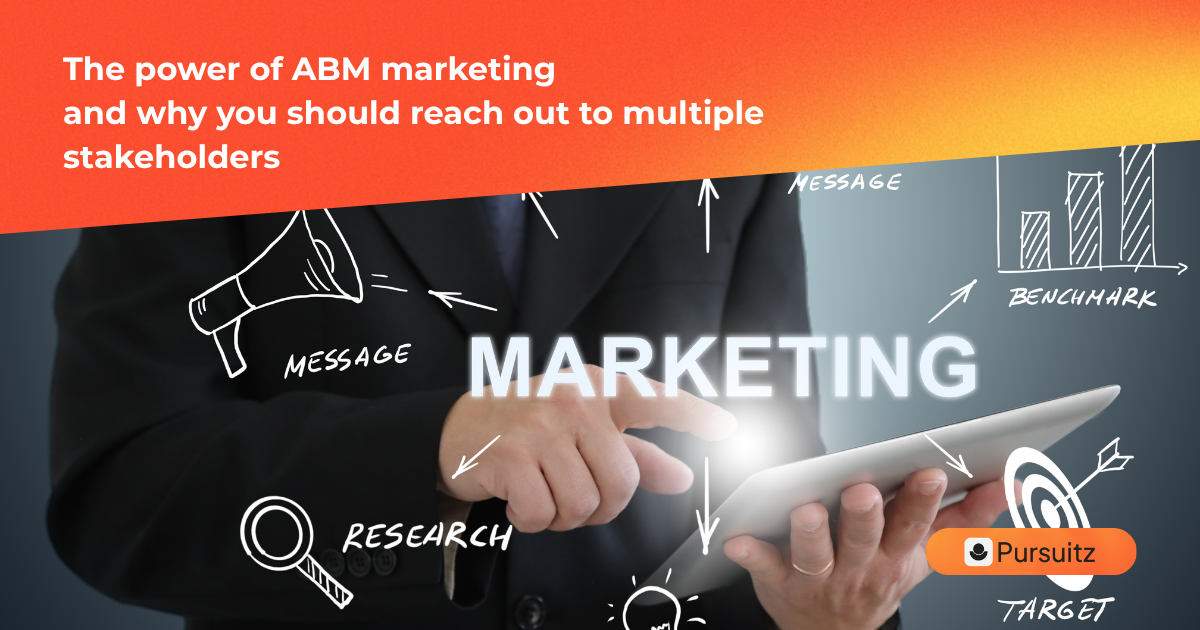
Pursuing a single contact per account and hoping they can carry the deal alone is the outbound equivalent of trying to win an election by convincing one voter. The decision is not made by one person. The outreach should not be either. At Pursuitz, account-level mapping is part of how we structure targeting before any campaign goes out.
Most outreach programs will not need to change their tools to do this. They need to change the unit of targeting from the individual to the account. Start with your current best-fit companies. Map two or three relevant roles at each. Build messages for each role. That one change tends to produce more impact than any copy or timing adjustment ever will.
B2B buying committee outreach, multi-stakeholder LinkedIn outreach, how many decision makers B2B, account-based outreach strategy, reaching multiple contacts per account, hidden buyers B2B deals, why B2B deals fail late stage, multi-contact outbound strategy, buying committee mapping B2B, stakeholder outreach LinkedIn 2025