

Most american sales teams waste valuable hours chasing leads that never convert, yet studies show that businesses with strong lead qualification processes drive up to 50 percent higher sales productivity. Getting lead qualification right means more than just collecting names or sending generic emails. This guide covers the proven steps for defining your ideal customer, building smart scoring models, and creating targeted outreach that delivers real results.
Table of Contents
- Step 1: Define Ideal Customer Profiles For Qualification
- Step 2: Develop Lead Scoring Criteria And Benchmarks
- Step 3: Segment And Source Qualified Prospects
- Step 4: Implement Multi-Channel Outreach Strategies
- Step 5: Verify And Refine Qualified Lead Status
Quick Summary
| Key Insight | Explanation |
|---|---|
| 1. Create a detailed ideal customer profile (ICP) | Analyze existing customer data to identify specific traits that denote your perfect customer. This helps in targeting prospects effectively. |
| 2. Implement dynamic lead scoring criteria | Develop a scoring model based on attributes that indicate a high-quality prospect, and update it regularly based on performance data. |
| 3. Segment prospects based on comprehensive data | Use various data points to segment your leads distinctly, tailoring outreach strategies to fit each unique group for better engagement. |
| 4. Develop a multi-channel outreach strategy | Synchronize your communication across different platforms and tailor messages to each, enhancing engagement and brand consistency. |
| 5. Continuously verify and refine lead status | Establish a scoring mechanism to track and improve lead quality by analyzing engagement and conversion signals throughout the sales process. |
Step 1: Define ideal customer profiles for qualification
Building a rock-solid ideal customer profile (ICP) is your roadmap to targeting the most promising leads. Think of an ICP as a detailed blueprint that highlights exactly who will find maximum value from your product or service. According to professional sales research, the key is identifying precise attributes that distinguish your perfect customers.
To craft a powerful ICP, start by analyzing your existing customer data. Look for common characteristics like industry vertical, company size, revenue range, and specific operational challenges. You want to create a profile so specific that when you see a potential lead, you instantly recognize they match your ideal customer type. Product strategy experts recommend mapping out detailed attributes that go beyond basic demographics. This means understanding not just who your customers are, but what motivates them, what problems they’re trying to solve, and how your solution uniquely addresses their needs.

Pro tip: Don’t just guess. Use actual data from your top performing customers. Review your CRM, conduct customer interviews, and analyze purchasing patterns. The more precise your ICP, the more effectively you can target and qualify leads that have genuine potential. Your next step? Transform this profile into a living document that evolves with your business and market dynamics.
Step 2: Develop lead scoring criteria and benchmarks
Lead scoring transforms raw prospect data into a strategic roadmap for identifying your most promising sales opportunities. Professional industry research highlights the critical importance of creating a systematic approach to evaluating potential customers based on their likelihood of converting.
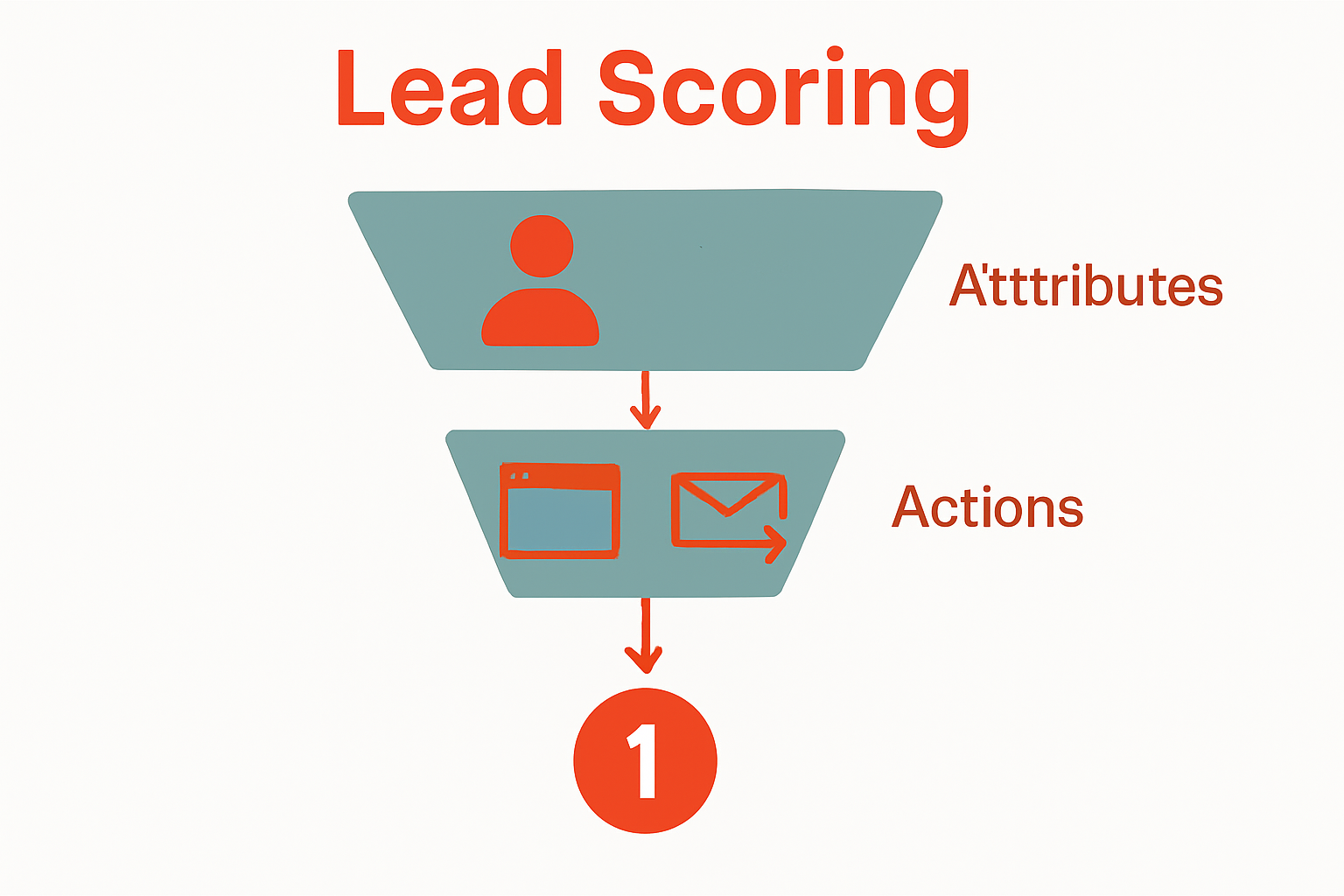
To build an effective lead scoring model, start by identifying the key attributes that signal a high quality prospect. Marketing technology experts recommend focusing on demographic data like job title, industry, company size, and geographic location. Assign numerical values to each attribute based on how closely it matches your ideal customer profile. For instance, a marketing director at a mid-sized tech company might score higher than an entry level employee at a small retail business.
Pro tip: Your lead scoring system should be dynamic, not static. Regularly review and adjust your scoring criteria based on actual conversion rates and changing market conditions. Start with a baseline model, track its performance, and be willing to recalibrate. This ensures your lead qualification process remains sharp and responsive. Your next step is to implement this scoring system and begin tracking how different lead attributes correlate with successful sales outcomes.
Step 3: Segment and source qualified prospects
Omnichannel lead generation strategies become powerful when you precisely segment and source your most promising prospects. Professional sales research reveals the critical importance of market mapping and strategic segmentation in identifying high potential customer groups.
To effectively segment prospects, leverage multiple data points that go beyond basic demographics. Customer profiling experts recommend collecting comprehensive information about potential leads including firmographic details, technological stack, purchasing behaviors, and pain points. Create distinct segments based on characteristics like industry vertical, company size, revenue range, and specific operational challenges. This granular approach allows you to craft highly targeted outreach strategies that resonate with each unique group.
Pro tip: Your segmentation should be a living document. Regularly audit and refine your prospect segments based on actual conversion rates and emerging market trends. Start with broad categories and progressively narrow your focus as you gather more data. Your next step is to develop personalized communication strategies tailored to each prospect segment, ensuring your outreach feels relevant and compelling.
Step 4: Implement multi-channel outreach strategies
Multi-channel outreach requires a strategic approach that connects with prospects across different platforms. Technology research highlights the critical importance of integrating flexible communication channels to maximize engagement and accelerate go-to-market efforts.
To build an effective multi-channel strategy, synchronize your communication across email, LinkedIn, phone calls, and targeted advertising. Scalable lead scoring systems emphasize the need for personalized touchpoints that adapt to each prospect’s preferred interaction method. This means crafting messages that feel native to each platform while maintaining a consistent brand voice and value proposition. Consider creating platform-specific content that speaks directly to your target audience’s unique challenges and interests.
Pro tip: Your multi-channel approach should be data driven and continuously optimized. Track engagement metrics across each platform, noting response rates and conversion performance. Start with a balanced mix of channels and progressively refine your strategy based on real world results. Your next step is to develop a systematic tracking mechanism that helps you understand which channels and messages resonate most effectively with your target prospects.
Step 5: Verify and refine qualified lead status
Valuable resources for lead generation become truly powerful when you implement a systematic approach to verifying and refining your lead qualification process. Advanced lead scoring systems emphasize the importance of continuous data analysis to validate and improve lead quality throughout the sales pipeline.
To effectively verify lead status, establish a dynamic scoring mechanism that tracks engagement levels, interaction quality, and conversion potential. Look beyond surface level metrics and dive deep into behavioral indicators such as content interaction, response frequency, and alignment with your ideal customer profile. By implementing a robust verification process, you can distinguish between leads that look promising on paper and those that demonstrate genuine sales readiness. This means creating a fluid scoring model that adjusts in real time based on prospect interactions and emerging data points.
Pro tip: Your lead verification process should be an ongoing refinement cycle. Regularly compare your scoring model against actual conversion rates, and be prepared to adjust your criteria. Start with conservative scoring thresholds and gradually optimize based on empirical evidence. Your next step is to develop a feedback loop that continuously validates and improves your lead qualification approach.
Accelerate Your B2B Sales with a Proven Lead Qualification System
Mastering lead qualification is essential to stop guessing where your next client will come from. This article highlights key challenges like crafting an ideal customer profile, developing dynamic lead scoring, and executing multi-channel outreach. If you struggle with identifying qualified leads that truly match your ICP or want to enhance your outreach with hyper-personalized messages that convert, you are not alone.
At Pursuitz, we specialize in turning complex lead qualification workflows into a seamless, results-driven system. Our end-to-end service includes precise prospect sourcing, tailored ICP creation, and outreach that feels like you spent ten minutes researching each lead. Plus, our clients consistently report at least 2x return on investment after just three months.
Ready to stop wasting time on unqualified leads and boost your sales pipeline with confidence Use our expert lead qualification approach combined with multi-channel campaigns to see real growth today Explore how Pursuitz can build your ideal customer profile, score and segment real prospects, and manage your outreach from LinkedIn to email To get started learn more about our full process at Pursuitz and take control of your pipeline now
Frequently Asked Questions
How can I create an ideal customer profile for lead qualification?
To create an ideal customer profile (ICP), analyze your existing customer data for common characteristics such as industry, company size, and revenue range. Begin by reviewing your CRM and conducting customer interviews to gather insights.
What key attributes should I include in my lead scoring criteria?
Include attributes such as job title, industry, and geographic location in your lead scoring criteria. Assign numerical values to these attributes based on how closely they match your ideal customer profile, allowing you to prioritize higher-quality leads.
How should I segment my sales prospects for better lead qualification?
Segment your prospects based on detailed characteristics like industry verticals, company size, and purchasing behaviors. Collect comprehensive data and refine your segments regularly based on emerging trends to ensure your outreach is targeted and effective.
What are effective multi-channel outreach strategies for B2B sales?
Implement a multi-channel outreach strategy by synchronizing communication across platforms like email, phone calls, and social media. Tailor your messaging for each platform to resonate with your audience, while tracking engagement metrics to optimize future efforts.
How do I verify and refine the status of my qualified leads?
To verify lead status, establish a dynamic scoring model that accounts for engagement and interaction quality. Regularly assess these metrics against actual conversion rates to refine your lead qualification process continuously.
How can I ensure my lead qualification process adapts to market changes?
Keep your lead qualification process dynamic by regularly reviewing and adjusting your scoring criteria based on changing market conditions. Set up a feedback loop to validate your model against actual sales outcomes and be prepared to optimize your criteria accordingly.