

Most American businesses discover that lead generation is much more than just collecting names. In fact, Gartner reports that effective lead generation can increase qualified leads by more than 60 percent. The right understanding of terms like MQL, SQL, and ICP can completely change how sales and marketing teams operate together. If you want to avoid mistakes and unlock real growth, learning the language behind American lead generation is essential.
Table of Contents
- What Lead Generation Terminology Means
- Types of Leads and Lead Qualification
- Core Concepts: ICP, MQL, SQL, and Pipeline
- How Multichannel Outreach Shapes Lead Gen
- Common Mistakes and Misused Terms
Key Takeaways
| Point | Details |
|---|---|
| Lead Generation Defined | Lead generation is the strategic process of attracting and nurturing potential customers to convert them into sales opportunities. |
| Lead Types and Qualification | Understanding and categorizing leads (Cold, Warm, Hot, MQLs, SQLs) is essential for prioritizing sales efforts and improving conversion rates. |
| Core Concepts | Familiarity with key terms like Ideal Customer Profile (ICP), MQL, SQL, and Sales Pipeline helps create effective lead generation strategies. |
| Multichannel Outreach | A successful lead generation strategy integrates multiple channels, such as social media, email, and content marketing, to engage prospects effectively. |
What Lead Generation Terminology Means
Lead generation represents the strategic process of identifying and attracting potential customers who might be interested in a company’s products or services. According to Gartner’s marketing glossary, lead generation is fundamentally about collecting contacts from prospective buyers with the ultimate goal of nurturing and qualifying them as potential sales opportunities.
In the B2B sales landscape, lead generation goes beyond simple contact collection. Coursera defines the process as attracting individuals to a business, cultivating their interest in specific products or services, and ultimately converting them into paying customers. This approach requires a sophisticated understanding of potential clients’ needs, pain points, and decision-making processes.
Effective lead generation involves multiple strategic components:
- Prospecting: Identifying potential customers who match ideal client profiles
- Engagement: Creating targeted content and outreach strategies
- Qualification: Assessing leads based on their likelihood to purchase
- Nurturing: Building relationships and trust with potential clients
Successful B2B lead generation demands a multichannel approach that combines digital marketing techniques, personalized communication, and data-driven insights to transform cold contacts into warm sales opportunities.
Types of Leads and Lead Qualification
Coursera outlines different lead types, highlighting the critical importance of understanding and categorizing potential customers in B2B sales. Lead classification helps businesses develop targeted strategies for converting prospects into paying customers.
In B2B sales, leads are typically categorized into several key segments:
- Cold Leads: Potential customers who match the ideal client profile but have not yet expressed direct interest
- Warm Leads: Contacts who have shown initial curiosity about a product or service
- Hot Leads: Prospects actively seeking solutions and demonstrating high purchase intent
- Marketing Qualified Leads (MQLs): Contacts identified through marketing efforts as having potential
- Sales Qualified Leads (SQLs): Leads vetted and deemed ready for direct sales engagement
The lead qualification process involves systematically evaluating these leads against specific criteria to determine their potential value. Effective lead qualification workflows help sales teams prioritize resources, focusing energy on prospects most likely to convert. This strategic approach involves analyzing factors such as budget, authority, need, and timeline (often referred to as the BANT framework).
Successful B2B organizations recognize that not all leads are created equal. By implementing rigorous sales qualification processes, businesses can transform their approach from scattered prospecting to precision targeting, dramatically improving conversion rates and sales efficiency.

Core Concepts: ICP, MQL, SQL, and Pipeline
Coursera’s exploration of the sales funnel reveals the critical interconnected stages that transform potential contacts into revenue-generating customers. Understanding these core B2B sales concepts enables businesses to create systematic approaches for identifying, nurturing, and converting high-value prospects.
Key terminology defines the strategic landscape of lead generation:
- Ideal Customer Profile (ICP): A detailed description of the perfect customer who would benefit most from your product or service
- Marketing Qualified Lead (MQL): A prospect who has engaged with marketing efforts but is not yet ready for direct sales contact
- Sales Qualified Lead (SQL): A lead that has been vetted by the marketing team and deemed ready for direct sales engagement
- Sales Pipeline: A visual representation of where potential customers are in the purchasing journey
The sales pipeline represents the structured progression of leads from initial contact to closed deal. Each stage requires specific strategies and interactions designed to move prospects closer to making a purchase. Organizations that meticulously track and optimize their pipeline can dramatically improve conversion rates and predict future revenue with greater accuracy.
Successful B2B sales teams recognize that these concepts are not isolated definitions but interconnected components of a sophisticated lead generation ecosystem. By developing a nuanced understanding of ICP characteristics, carefully qualifying leads through MQL and SQL stages, and maintaining a dynamic sales pipeline, businesses can create predictable and scalable growth strategies.
How Multichannel Outreach Shapes Lead Gen
Content marketing strategies have transformed the landscape of B2B lead generation, enabling businesses to reach potential customers through diverse and interconnected channels. Modern organizations recognize that no single approach guarantees success in attracting and nurturing qualified leads.
Key multichannel outreach strategies include:
- Social Media Engagement: Leveraging platforms like LinkedIn to build professional networks
- Email Marketing: Developing targeted, personalized communication campaigns
- Content Creation: Producing valuable, industry-specific resources that demonstrate expertise
- Digital Advertising: Strategically placing targeted ads across relevant online platforms
- Webinars and Virtual Events: Creating interactive learning opportunities for potential clients
Coursera highlights the critical importance of integrating multiple communication channels to create a comprehensive lead generation approach. The most successful B2B organizations develop a synchronized strategy that allows potential customers to interact with their brand through multiple touchpoints, ensuring consistent messaging and increased engagement.
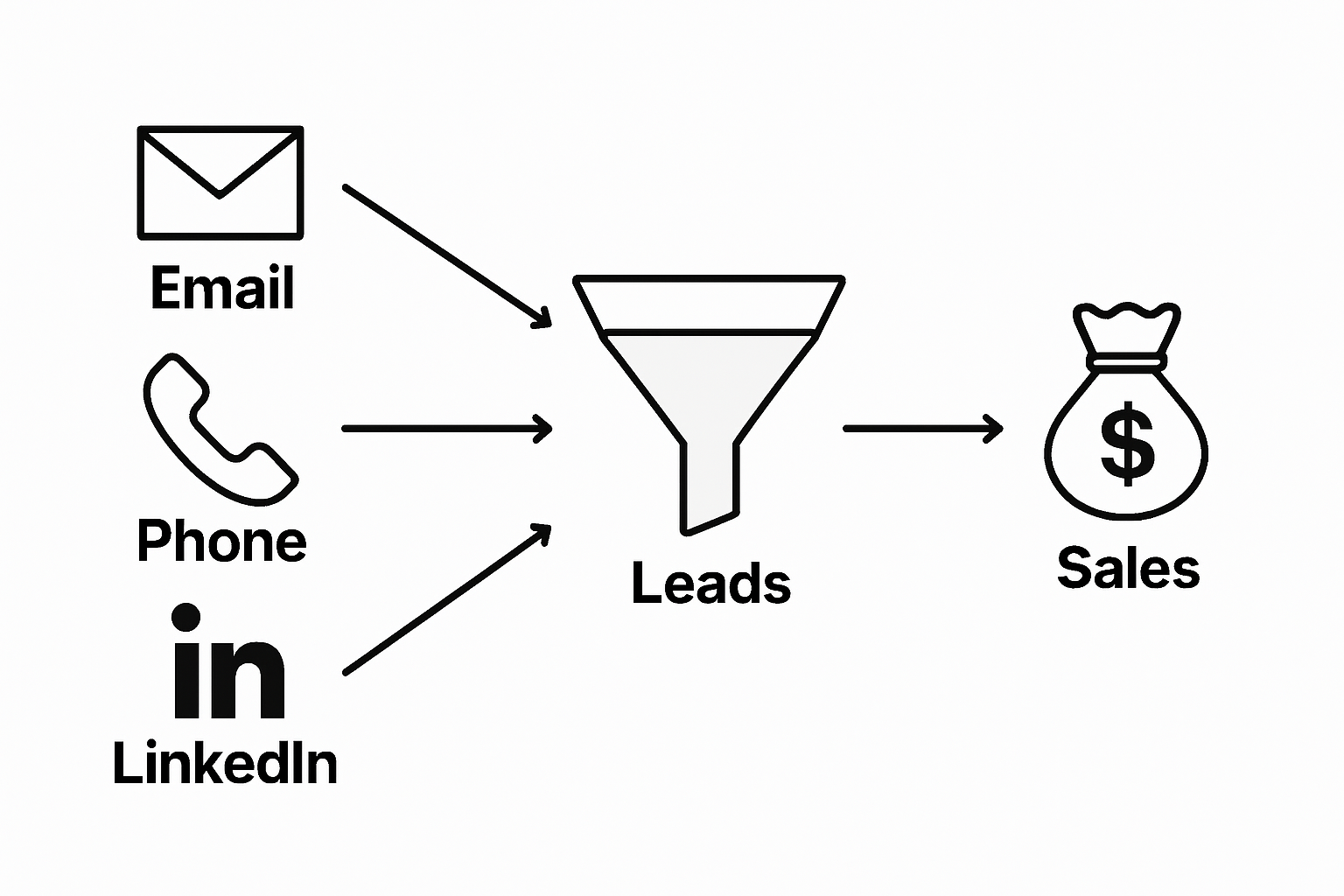
The power of multichannel outreach lies in its ability to meet potential customers wherever they are in their buying journey. By diversifying communication strategies and creating a seamless experience across different platforms, businesses can significantly improve their chances of attracting, engaging, and converting high-quality leads. Omnichannel lead generation techniques enable companies to create a more dynamic and responsive approach to identifying and nurturing potential business opportunities.
Common Mistakes and Misused Terms
Lead generation terminology misuse often creates significant communication barriers between marketing and sales teams. Understanding and correctly applying key terms is crucial for developing effective B2B sales strategies that align organizational efforts and maximize conversion potential.
Common mistakes in lead generation terminology include:
- Confusing MQLs with SQLs: Prematurely pushing marketing qualified leads into sales conversations
- Misdefining Ideal Customer Profile (ICP): Creating overly broad or unrealistically narrow target profiles
- Inconsistent Lead Scoring: Using subjective or inconsistent criteria for evaluating lead quality
- Overlooking Lead Nurturing: Treating leads as transactional contacts instead of relationship-building opportunities
- Misinterpreting Conversion Metrics: Focusing on quantity over genuine lead quality
Precise language matters in B2B sales. Terminology misalignment can create significant friction, causing potential leads to slip through the cracks or receive inappropriate communication. Sales and marketing teams must develop a shared lexicon that accurately reflects the nuanced stages of the customer acquisition process.
Successful organizations invest time in creating clear definitions and standardized processes. By establishing consistent terminology, businesses can create more transparent communication channels, improve interdepartmental collaboration, and develop more targeted strategies for identifying and converting high-potential leads.
Master B2B Lead Generation Terminology to Fuel Your Sales Pipeline
Understanding terms like ICP, MQL, and SQL is crucial but turning these concepts into real, qualified leads can be challenging. The article highlights common pain points such as ineffective lead qualification, inconsistent outreach, and the need for multichannel engagement strategies that truly connect with your ideal customers. At Pursuitz, we solve these problems by managing your entire lead generation process from prospect sourcing to meeting booking, ensuring every lead matches your ICP and receives personalized attention through our hyper-targeted LinkedIn and email campaigns.

Ready to stop guessing where your next client will come from? Experience how our end-to-end solutions create predictable, qualified leads that feed your sales pipeline. Visit Pursuitz today and start doubling your ROI in just three months with strategic lead generation powered by proven terminology and flawless execution.
Frequently Asked Questions
What is lead generation in B2B sales?
Lead generation in B2B sales is the strategic process of identifying and attracting potential customers who are interested in a company’s products or services. It involves collecting contacts, nurturing leads, and qualifying them as sales opportunities.
What are the different types of leads in B2B sales?
In B2B sales, leads are commonly categorized into cold leads, warm leads, hot leads, marketing qualified leads (MQLs), and sales qualified leads (SQLs). Each type reflects the level of interest and readiness for a sales conversation.
How do you qualify leads effectively?
Effective lead qualification involves evaluating leads against specific criteria to determine their potential value, using frameworks like BANT (Budget, Authority, Need, Timeline) to prioritize leads that are likely to convert into customers.
Why is multichannel outreach important for lead generation?
Multichannel outreach is essential for lead generation as it allows businesses to engage potential customers through various platforms, ensuring consistent messaging and enhancing the chances of attracting and converting high-quality leads.